Syllatiles - Word Puzzle Game
Hitapps GamesWord
4.4594.00 Reviews
- Version
- 2.0.0
- Installs
- 500.00K
- Age Rating
- Everyone
Screenshots
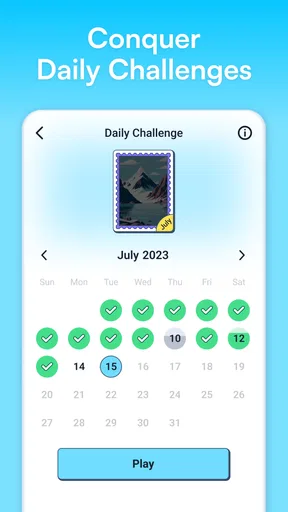
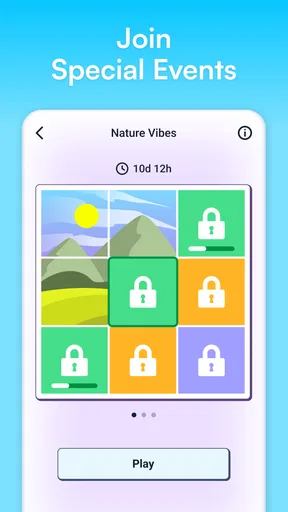
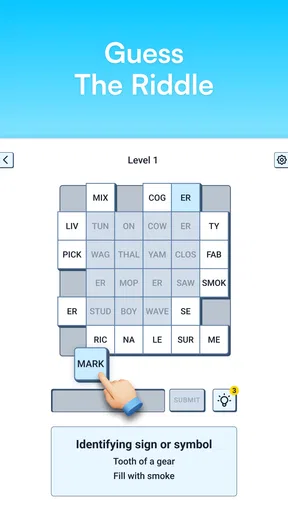
Our Review of Syllatiles - Word Puzzle Game
 Analysis by Appyee
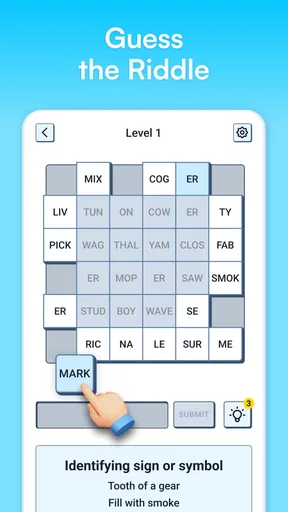
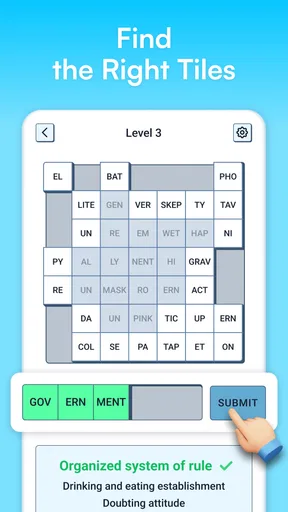
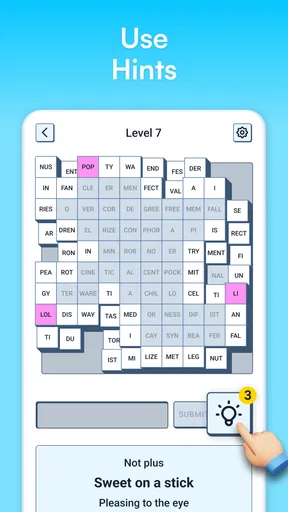
I spent time with Syllatiles as a compact word game built around arranging letters and solving logic-based puzzles. It is the kind of title I can open for a few minutes while waiting for coffee, yet it has enough mental friction to make a short session feel worthwhile. Rather than asking me to race a timer or compete with other players, it focuses on finding sensible word solutions from the pieces placed in front of me.
That simple idea gives the game an approachable starting point. The interface and rules are easier to understand than those of many larger word-puzzle games, so I did not need a tutorial-heavy introduction before playing. At the same time, the puzzles are not merely vocabulary tests. I had to look at letter groupings, consider possible word shapes, and decide whether a tempting answer actually fit the logic of the board. The best part is the small moment when a confusing arrangement suddenly becomes readable.
How the current game feels to play
Syllatiles sits comfortably in the word category, but it does not feel exactly like a traditional crossword or a standard anagram game. The central task is to make words from tile-like letter pieces, with the puzzle structure encouraging me to think about placement as well as spelling. That distinction matters: someone who enjoys word searches may appreciate the vocabulary element, while someone who prefers pure logic may enjoy the process of testing arrangements until the pattern makes sense.
My first sessions felt deliberately low-pressure. I could concentrate on one puzzle without needing to memorize a complicated rule set, and the short format made it suitable for small breaks. This is especially useful on a phone, where a game often has to be enjoyable before the player has committed to a long session. I could stop after a single challenge without feeling that I had abandoned a large campaign.
The game is free to download, which makes trying it straightforward. It is rated for Everyone, so it is a reasonable choice for families looking for a calm word activity rather than an action game or a title built around mature themes. The developer is Hitapps Games, and the current build is version 2.0.0. Those details are useful when deciding whether an older installation needs updating before judging the present experience.
Its audience is broader than serious word-game specialists. I can see it working for a casual player who wants something more thoughtful than scrolling through social media, for a learner who likes experimenting with spelling, or for an experienced puzzle fan who wants a lighter alternative to a daily crossword. It is less suitable for someone who needs a large competitive community, deep narrative progression, or a constant stream of new mechanics.
The puzzle loop rewards patient inspection
The most useful habit I developed was to stop trying to solve the whole arrangement in one leap. I first looked for familiar letter combinations, then considered where they might connect to longer words. This approach was more reliable than guessing complete answers immediately. When I became stuck, rearranging my attention rather than repeatedly forcing the same guess often exposed a possibility I had overlooked.
That makes the game quietly educational without presenting itself as a lesson. I found myself noticing prefixes, endings, and common letter patterns more quickly as I played. It is not a replacement for a structured language-learning course, because the goal remains solving the puzzle rather than explaining vocabulary, but it can still encourage careful spelling and flexible word recognition.
One practical use is a short evening wind-down. I could play while listening to music, because the game does not demand the same split-second reactions as an arcade title. Another is a waiting-room session where I wanted something that could be paused mentally at any point. The lack of a need for a long uninterrupted run is one of its strongest phone-friendly qualities.
Where it differs from familiar word games
Compared with a crossword, Syllatiles gives me less dependence on general knowledge and clue interpretation. A crossword may reward knowledge of geography, culture, or wordplay, while this game puts more weight on seeing how letters can form a valid arrangement. That makes it more approachable when I want a puzzle without confronting a difficult clue about an unfamiliar subject.
Compared with a basic anagram game, it feels more structured. An anagram usually asks me to find as many words as possible from a fixed group of letters, whereas the tile-based presentation gives the act of arranging letters a more physical quality. The trade-off is that players who enjoy free-form word hunting may find the guided structure less liberating.
It also differs from competitive word games that emphasize speed, rankings, or head-to-head pressure. I prefer Syllatiles when I want to think at my own pace. If my goal were to improve rapid recall or test myself against other players, I would choose a more competitive alternative. Here, the reward comes from solving the individual construction rather than proving that I am faster than someone else.
What version 2.0.0 means for players
The current version gives the game a clear reference point for new and returning users. I would not treat the version number alone as proof of a major redesign, but it does indicate that the app has moved beyond its original release build. The game first appeared on April 24, 2023, and the present version is 2.0.0, so existing players may notice that the product is now being evaluated as a more established title rather than a brand-new experiment.
For someone installing it today, the important effect is practical: judge the current app rather than relying on impressions from its launch period. A returning player should also check that the installed build is current before deciding whether the game has changed for better or worse. I would keep expectations measured, though. The available version information confirms the current release, not a promise of a particular future roadmap or a list of specific additions.
The minimum operating-system requirement is Android 8.0. That keeps the game accessible to many devices still in everyday use, while owners of very old phones should check compatibility before planning around it. Because this is a visually focused puzzle rather than a demanding action game, the appeal is not tied to having the newest hardware. The more relevant question is whether the device handles ordinary touch input comfortably.
Existing users are likely to care about consistency more than spectacle. A word puzzle succeeds when its letter placement feels readable and its rules remain dependable. If an update preserves that clarity, it helps the game stay useful as a daily casual habit. If future changes make the interface busier or add pressure that does not suit the original format, longtime players may feel that the quiet puzzle identity has been weakened.
Free entry, with a cost worth considering
The free starting point is a genuine advantage. I could test the core appeal without committing money first, which is exactly what I want from a casual puzzle. In-app purchases range from $2.49 to $79.99 per item, so the pricing deserves attention before treating the game as completely cost-free. The broad spread means a player should look carefully at any purchase prompt and decide whether it solves a real problem or merely removes a moment of friction.
My advice is to play enough of the free experience to understand how often I actually want help before buying anything. A purchase can make sense for someone who plays frequently and values convenience, but it is harder to justify for a person who only opens the game occasionally. The free download makes experimentation easy; the optional spending is where a little restraint becomes useful.
This is also an important distinction from some traditional word activities. A newspaper crossword or a physical puzzle book has a clear one-time format, while a mobile game may invite repeated engagement and additional purchases. Syllatiles is more convenient and portable, but that convenience can make it easier to spend impulsively. I would approach it as a free trial first, not as a purchase I automatically need in order to enjoy the basic idea.
Small strategies that make difficult boards less frustrating
I found three habits particularly helpful. First, I looked for short, recognizable fragments before attempting longer words. A small confirmed connection can reduce the number of plausible arrangements and make the rest of the board easier to read. Second, I avoided treating the first familiar word I saw as automatically correct; a word may look promising while fitting poorly into the surrounding structure.
Third, I used a deliberate reset when I had been staring at the same arrangement for too long. Instead of tapping randomly, I mentally grouped the tiles in a different order and searched for alternate endings. That change of perspective often worked better than adding more guesses. These are modest techniques, but they turn the game from trial-and-error into a repeatable solving process.
A fourth tip is to play when I can give the board a little attention. The game is suitable for short sessions, but that does not mean it is ideal while multitasking heavily. If I am distracted by a conversation or repeatedly interrupted, I am more likely to misread a possible word and blame the puzzle. The calm design works best when I give it a few focused minutes.
Where the experience still has limits
The same simplicity that makes Syllatiles welcoming can limit its long-term appeal. Players who need dramatic progression, character development, or a strong sense of unlocking new systems may find the format too restrained. The game’s pleasure depends on the puzzle itself, so anyone who does not enjoy manipulating letters will not be rescued by a story layer or action mechanics.
I also would not choose it as my only word game if I wanted broad variety. A crossword offers clues with different knowledge demands, a spelling game can provide direct language practice, and a competitive title can create social pressure. Syllatiles occupies a narrower but pleasant space between those options: structured word reasoning without the burden of a large ruleset.
Another limitation is the possibility of uneven personal difficulty. A puzzle that feels satisfying to one player may feel obvious to another, depending on vocabulary and familiarity with word patterns. That is normal for this genre, but it means the game’s value is personal rather than universal. I would recommend trying the free version before deciding whether its challenge level matches my preferences.
The purchase range is the other clear point of friction. Even though the game is free to start, the presence of higher-priced individual items means I would avoid tapping through prompts automatically. Players who dislike any form of in-app monetization may prefer a paid word app with a fixed upfront cost, even if that alternative offers less convenience or fewer ongoing puzzles.
Who should install it, and who should pass?
I think Syllatiles is a good fit for someone who wants a quiet, touch-friendly word puzzle that can fill a short break. It is particularly appealing if I enjoy spotting patterns, rearranging letters, and solving problems without a countdown. Families may also appreciate the Everyone rating and the absence of an action-focused presentation.
I would suggest skipping it if my priority is competitive play, multiplayer interaction, or advanced crossword-style clue solving. It is also not the best choice if I want a language course with definitions, pronunciation, grammar explanations, and a planned curriculum. The word content can exercise recognition, but the app’s main purpose is solving, not teaching in a formal sequence.
For returning players, the current version is worth checking before making a judgment based on an old installation. For new players, the sensible route is to download the free game, play several sessions at different times, and notice whether the tile arrangements remain satisfying after the initial novelty fades. That test answers a more useful question than a rating alone: do I enjoy the actual solving rhythm?
My recommendation after using it
Syllatiles works because it keeps its central idea understandable while giving it enough structure to feel like a real puzzle rather than a random word generator. I enjoyed the way a board could look messy at first and then become manageable after I identified one useful letter pattern. The game is easy to pick up, flexible enough for short breaks, and more thoughtful than its compact presentation may suggest.
Its audience should still be realistic about what it offers. This is not a substitute for a full crossword collection, a competitive spelling platform, or a deep progression game. The free entry is attractive, but the in-app purchase range means I would pay attention to spending rather than assuming every convenience is necessary. Those limitations do not ruin the experience; they simply define the kind of player who will get the most from it.
With an average rating of 4.4 from around 9.7 thousand ratings and more than 500 thousand installs, it has clearly attracted a substantial casual audience. Those figures suggest that the concept connects with many players, although my decision would still rest on whether I enjoy its specific style of letter arrangement. The current release gives newcomers a sensible point of entry, while future updates will matter most if they preserve clarity and add variety without making the game noisy.
My final view is positive but measured: Syllatiles is a worthwhile free word-game download for relaxed, independent puzzle solving. I would recommend it to a friend who likes anagrams but wants more structure, or to anyone looking for a calm phone activity that rewards attention rather than speed. I would point a competitive player or a serious crossword enthusiast elsewhere. For the right audience, though, its focused tile-based approach makes a few spare minutes feel pleasantly productive.
Verdict
Strengths of Syllatiles - Word Puzzle Game
- Simple tile-based gameplay that is easy to learn
- Short puzzles fit well into quick play sessions
- Helpful hints can assist when you get stuck
- Word challenges support vocabulary and spelling practice
- Clean interface keeps attention on the puzzle board
Limitations of Syllatiles - Word Puzzle Game
- Some puzzles may feel repetitive after extended play
- Difficulty can vary noticeably between individual levels
- Hints or extra features may be limited without purchases
- Requires comfort with English words and spelling
- Players seeking fast action may find the pace too slow
Other Releases by Hitapps Games
View All

Similar Picks in This Category
View All
Word Search - Word Puzzle Game
Bluetile4.8

Word Search Quest - Puzzles
Blackout Lab4.8

CodyCross: Crossword Puzzles
Fanatee, Inc.4.7

Words of Wonders: Crossword
Fugo Games4.9

Wordscapes: Word puzzle game
PeopleFun4.7

Word Search Explorer
PlaySimple Games4.9
Frequently Asked Questions
What is Syllatiles - Word Puzzle Game and how does it work?
Syllatiles is a word puzzle game built around arranging syllable tiles to form complete words. Instead of simply connecting individual letters, you combine sound units in the correct order, making each level feel like a mix of vocabulary practice and logical problem-solving. The game is easy to understand, but later puzzles can require careful planning, especially when several tiles appear to fit more than one possible word.
Is Syllatiles suitable for beginners and children?
Yes, Syllatiles is generally accessible to beginners because its core gameplay is simple to learn and does not require fast reflexes. Players can take their time examining the available syllables and testing possible combinations. It may also be useful for children, students, and anyone practicing spelling or vocabulary, although the difficulty and word selection can vary, so younger users may occasionally need help with unfamiliar words.
Does Syllatiles require an internet connection to play?
The main puzzle experience may be playable without a constant internet connection, which is convenient for travel or offline gaming. However, certain features can depend on connectivity, including advertisements, cloud synchronization, updates, leaderboards, or optional purchases. For the most reliable experience, open the game online after installation and check which features remain available when your device is placed in airplane mode.
Are there hints, ads, or in-app purchases in Syllatiles?
Syllatiles may include assistance features such as hints or ways to reveal part of a solution when a puzzle becomes difficult. Depending on the version and platform, these features can be supported by advertisements or optional in-app purchases. Before downloading, review the store listing and the purchase settings on your device, particularly if children will use the app, since the exact monetization options may change with updates.
What makes Syllatiles different from ordinary word games?
The main difference is its focus on syllables rather than isolated letters. This gives the puzzles a more phonetic and language-focused character, while still requiring the player to recognize patterns, understand word structure, and make decisions about tile placement. It is a good choice for players who enjoy calm, thoughtful challenges and want something different from traditional crossword, anagram, or word-search games.
Play our best games!


